Author: Mayur Lohite
-

How to Effectively Block Spam in Contact Forms with .NET Core 8.0 MVC
Learn how to block spam in your contact forms using a simple hidden field technique in .NET Core 8.0 MVC. This quick, effective solution filters out unwanted submissions, ensuring you only get genuine leads without complicating the user experience.
-

Understanding the Difference Between const and readonly in Csharp
Explore the key differences between const and readonly in C#. Learn when and how to use each for optimal code performance and maintainability.
-

Join Our Talent Pool: Explore Various Job Opportunities!
Discover daily job openings and apply easily through our streamlined process. Sign up for alerts and connect with top staffing agencies via LinkedIn. Start your career journey today!
-

Exploring the Zip Method in LINQ: A Game-Changer for Merging Sequences
Have you come across the Zip method in LINQ? It’s an incredibly useful feature for merging sequences, and it’s a must-have for any developer’s toolkit. Let’s explore how this method can streamline your coding process, particularly with the new enhancements in .NET 6.
-
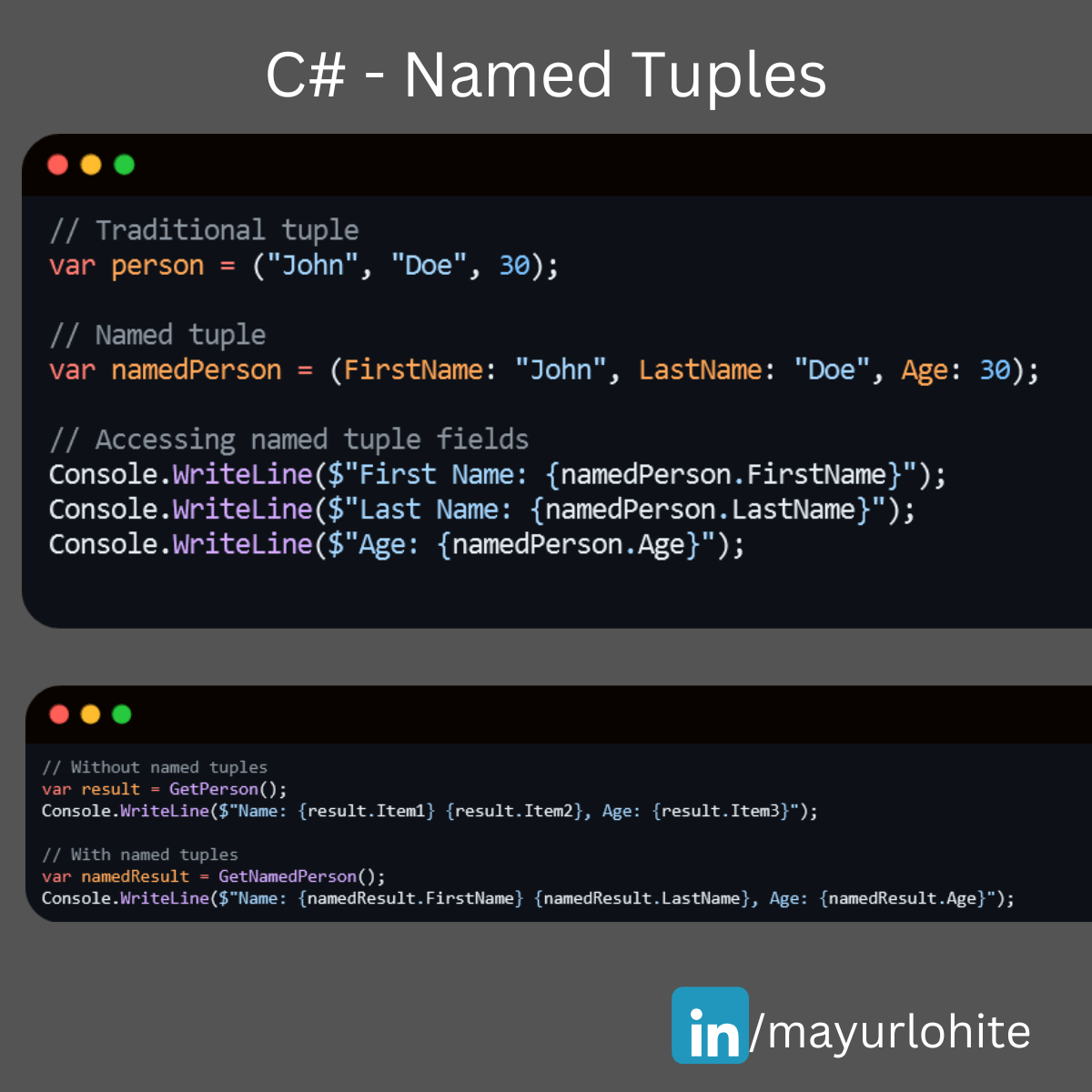
A Short tip to boost Your C# Skills with Named Tuples
Want to enhance the readability and maintainability of your C# code? Consider using named tuples! They offer a way to create lightweight, self-descriptive data structures without the need for a full class definition.
-

Boost your EF Core performance with bulk updates using ExecuteUpdate
🚀 Exciting News for EF Core Users! 🚀 The latest version of Entity Framework Core (EF Core 7) introduces a powerful new feature: Bulk Update! This feature significantly enhances performance when updating multiple records in your database. Let’s dive into how it works and see a sample in action. What is Bulk Update? Bulk Update…
-
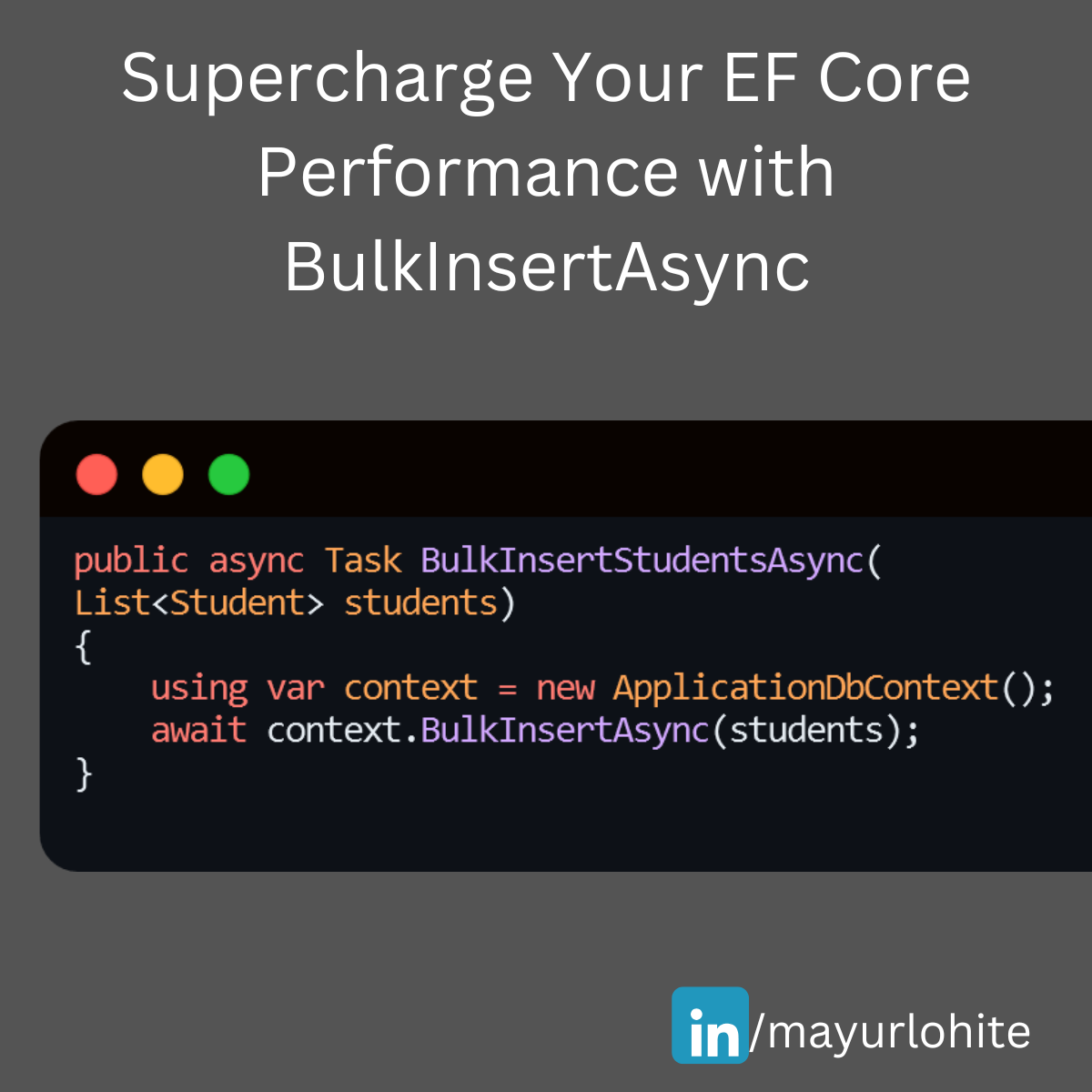
Supercharge Your EF Core Performance with BulkInsertAsync
Having issues with large data saving/insert in your .NET applications? EF Core’s BulkInsertAsync could be the solution you need. Simply install EFCore.BulkExtensions from NuGet. Here’s a quick guide to help you get started
-
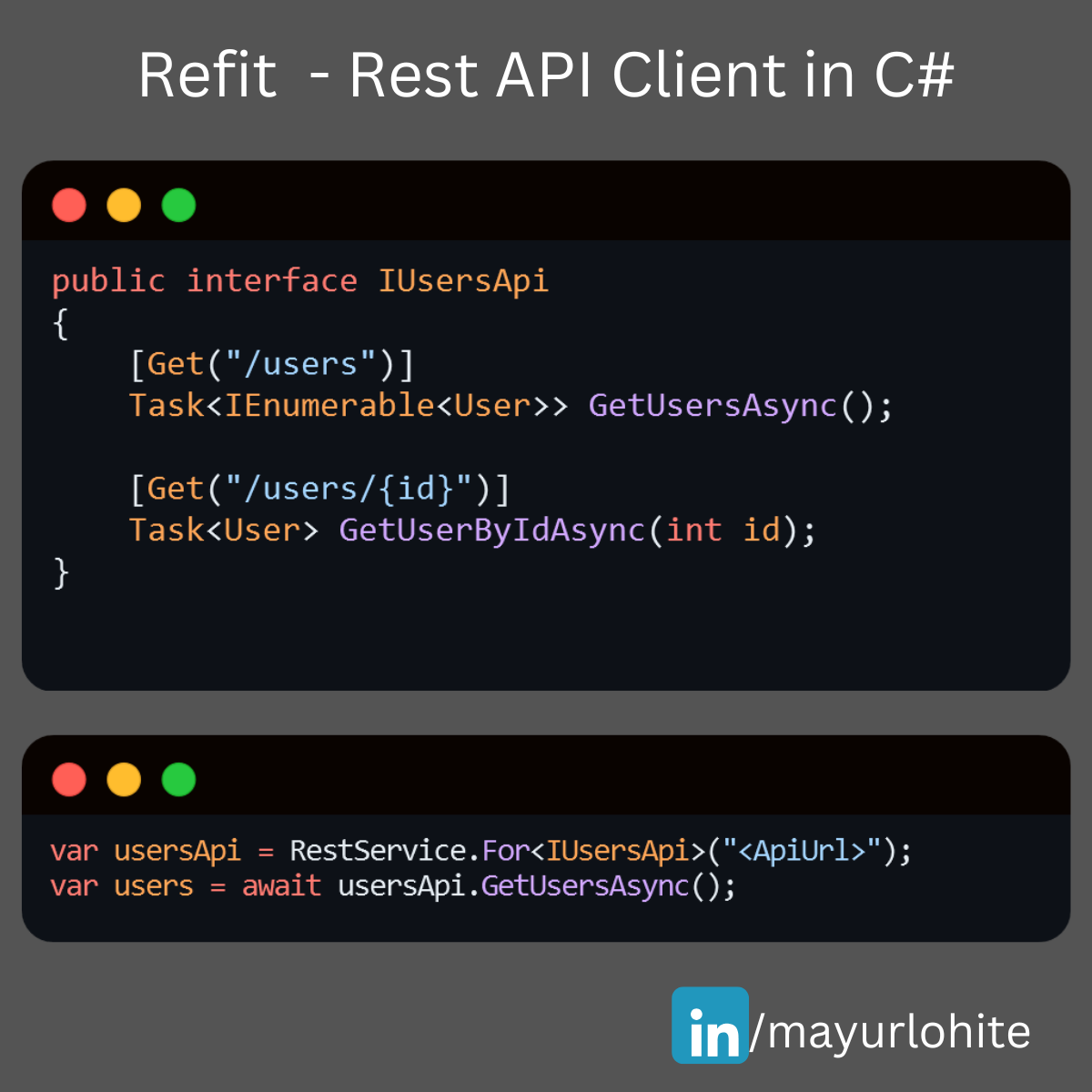
Simplify Your API Calls with Refit in C# .NET Core!
Refit is a powerful library in C# .NET Core that simplifies making HTTP requests to RESTful APIs.
-
-

Building a Basic open source E-Commerce Website with ASP.NET Core 8
In this blog, we’ll explore how to build a basic eCommerce website using ASP.NET Core 8. We will use MLCart, an open-source project available on GitHub, to demonstrate key features and how to get started with building your own eCommerce platform.